Mission

The mission of corpoemcadeia is to uphold the dignity and raise the visibility of people deprived of their liberty, contributing to the humanization of prisons and fostering critical thinking about the prison system and structures of violence.

It operates within the field of artistic practices aimed at social inclusion and transformation, working at the intersection of social justice, human rights, and democratic principles.


The project is grounded in an ethic of justice that recognizes each person in their inalienable uniqueness and as part of a relational ecology, where freedom and responsibility are built upon interdependence and mutual affect.

Contemporary Dance and Gestalt Psychotherapy form the foundation of a restorative and transformative practice, committed to building more just, safe, and inclusive communities.
Methodologies

The methodologies of corpoemcadeia constitute a dynamic field of research, in which the theoretical and practical models of contemporary dance and psychotherapy adapt to and enhance one another through attentive listening in the “here and now” and by recognizing that the whole is always greater than the sum of its parts.

The work in context is developed by a co-creative duo—an artist and a psychotherapist—who integrate artistic and relational knowledge and practices, ensuring an approach that is simultaneously aesthetic, therapeutic, and social.

The implementation of these methodologies involves continuous observation, systematization, and ongoing refinement, combining theoretical and experimental processes that draw upon artistic, therapeutic, philosophical, and social materials.


The artistic experience engages perception, emotion, and movement, transforming the body into an instrument of observation and relational experimentation.

Linked to Gestalt Psychotherapy, the practice promotes insight, psychological elaboration, and emotional contact, functioning as a laboratory for the person’s holistic development.

Dance and psychotherapy converge in the understanding of psychological phenomena and the activation of relational and symbolic processes, creating living bridges between the conscious and the unconscious, the personal and the collective, the poetic and the political.

Correctional Facilities

Team

  • Artistic Direction
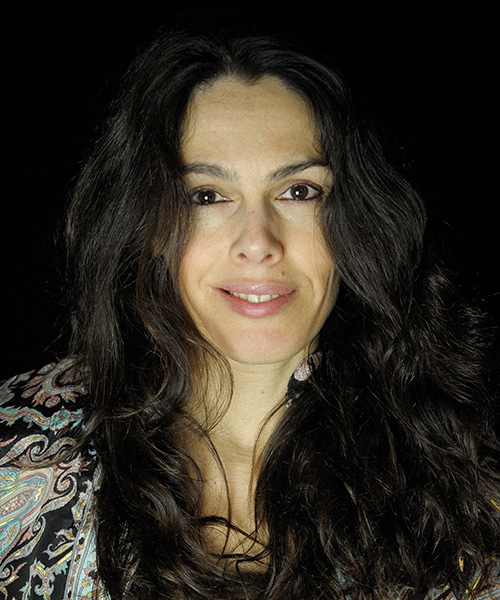
  • Catarina Câmara
  • Catarina is a dancer, creator, educator, and research associate at the Institute of Criminal Law and Criminal Sciences at the Faculty of Law of the University of Lisbon. She holds a degree in Law (FDUL) and in Dance (ESD-IPL), with training in Restorative Justice (EFRJ—Belgium and ISCSP) and as a counselor in Gestalt Psychotherapy (IFG—Italy).
  • Her work revolves around artistic practices centered on the body and relationships, the ethics of care, and alternative models to traditional justice, such as restorative and transformative justice. She develops and implements artistic and participatory methodologies within a movement to integrate the poetic, political, and psychosocial dimensions of the body, applied in various community and institutional contexts—schools, prisons, universities, and cultural institutions.
  • Since 2019, she has directed CORPOEMCADEIA, an artistic project for social inclusion developed within a prison setting. She has published articles in newspapers and is the author of the book *Corpoemcadeia - Dance, Prison, and Gestalt: Practices Beyond Good and Evil*, published in 2026 by the Calouste Gulbenkian Foundation.


  • Executive Direction and Production
  • Magda Bull
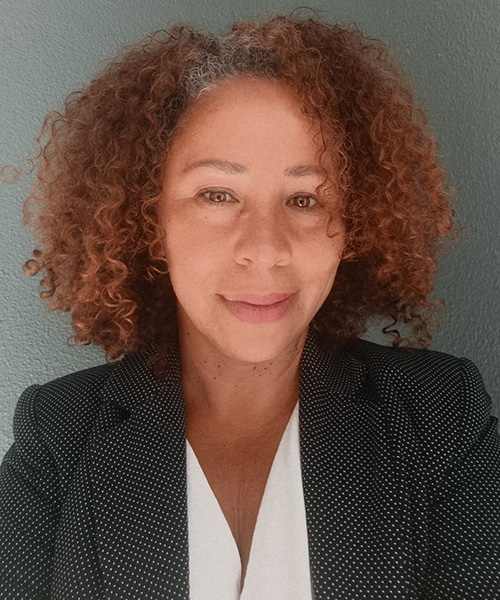
  • Magda is a cultural manager and producer with degrees in Contemporary Dance Production and Management (Fórum Dança, 2001) and Creative Television Production (Universidade Independente, 2004).
  • She has been working continuously in the cultural sector for over 25 years, taking on multiple roles in production, management, and artistic supervision. She has collaborated with various artists and leading organizations, both in creative and programming contexts. As a specialist, she collaborated with the General Directorate for the Arts (2017–2018) within the framework of the new model for supporting the arts. Notable is her work as a manager at the Olga Roriz Company (2018–2023), coordinating, among other projects, the first edition of Corpo em Cadeia (2019–2022).
  • More recently, she coordinated the production of the official Portuguese representation at the 60th International Art Exhibition – La Biennale di Venezia. In recent years, she has advised various cultural entities and projects as a guest external consultant.
  • She founded the cultural association Creative Connection (2023), with the aim of promoting artistic and social projects in the fields of design, craftsmanship, and the performing arts.


  • Resident Artists
  • Magnum Soares
  • Magnum is a multidisciplinary artist working across dance, visual arts, and puppet theater. He has lived in Portugal for a decade, where he earned a degree in Dance-Theater and conducts research focused on the fusion of body and matter. His practice transforms recyclable materials and unconventional resources into movement, gesture, and visual poetry.
  • As an arts educator, he develops creative projects with communities, using dance and puppet theater as tools for imagination, connection, and collective transformation.
  • Marlene Vilhena
  • Marlene holds a bachelor’s degree in Mathematics. She trained at E. S. Dança and Fórum Dança. She is a professional in dance, yoga, and massage. She supports the artistic direction of projects at DeVIR/CAPa—notably Partis & Art For Change and the FAAP course.
  • She moves between contemporary dance, martial arts, and somatic and therapeutic practices in artistic and community contexts. She is interested in processes of creation, transformation, and self-knowledge grounded in listening, reflection, and intuition, dreaming, awareness, and human connection. Through the body, breath, and touch, she explores presence, encounter, silence, expression, and freedom.


  • Resident Therapists
  • Mariana Ferreira
  • Mariana is a psychoanalytic psychotherapist specializing in relational psychoanalysis and a student of Lacanian psychoanalysis; she holds a degree in Psychomotor Rehabilitation from FMH. She is deepening her study of somatic practices from a therapeutic perspective—Dynamic Theatre, Deep Memory Process, and Authentic Movement. She is interested in creating therapeutic spaces that are simultaneously safe and risky.
  • As a psychotherapist, she is engaged in the invention of language that is close to the bodily experience—the unbearable aspects of human experience, the visceral, and the poetic.
  • Roberto Chiodelli
  • Roberto is a clinical psychologist (Ph.D. from the University of Algarve) who works at the intersection of body, emotion, and consciousness. His practice integrates mindfulness, body-oriented therapy, and group dynamics in clinical, educational, and community settings.
  • He is interested in transformative processes that involve listening to the body, self-expression, and the creation of spaces for presence and connection.


  • Project Monitoring and Evaluation
  • Lia Pappamikail
  • Marta Tagarro
  • Rafela Alves


  • Legal Counseling
  • Sónia Moreira Reis


  • Collaborating Researcher
  • Ana Dinger


  • Design
  • Joana&Mariana


  • Website
  • Atelier Mútuo


  • Video and photography
  • Miguel Afonso


  • Website and social media management
  • Fabiana Miranda


  • Press office
  • Rita Bonifácio 


  • Strategic Partnerships
  • Direção-Geral de Reinserção e Serviços Prisionais
  • Estabelecimento Prisional de Vale de Judeus
  • Estabelecimento Prisional de Odemira


  • Artistic Partners
  • Devir/Capa: Centro de Artes Performativas do Algarve
  • Companhia Olga Roriz
  • CRIA_ Centro em Rede de Investigação em Antropologia
  • And Lab: Centro de Investigação em Arte - Pensamento & Políticas da Convivência


  • Academic Partners
  • Centro de Investigação de Criminologia e Direito Penal da Faculdade de Direito da Universidade Clássica de Lisboa
  • InstitutoPolitécnico de Santarém: Escola Superior de Educação de Santarém
  • Instituto Superior de Ciências Sociais e Políticas da Universidade de Lisboa
  • Observatório Europeu das Prisões


  • International Partners
  • Fórum Europeu de Justiça Restaurativa (BE)
  • Instituto Gestalt de Florença (IT)

History

O CorpoEmCadeia nasceu em 2019 no Estabelecimento Prisional do Linhó, no âmbito da iniciativa PARTIS – Práticas Artísticas para a Inclusão Social, da Fundação Calouste Gulbenkian, promovido pela Companhia Olga Roriz.

Após a primeira edição (2019–2022) e a apresentação do espetáculo A Minha História Não é Igual à Tua, o projeto estabeleceu as bases metodológicas e filosóficas do projeto.

Desde então, o CorpoEmCadeia deu continuidade ao seu trabalho no Linhó e expandiu a sua intervenção para o Centro Educativo Padre António Oliveira, em Caxias.

O projeto CorpoEmCadeia Linhó–Caxias integra o plano de atividades 2026–2030 da Companhia Olga Roriz, com o apoio da Direção-Geral das Artes e da Fundação “la Caixa”, consolidando a sua ação artística e social em contextos de privação de liberdade.